
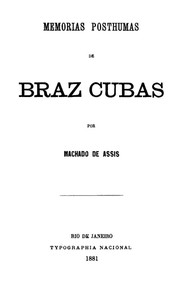
Memorias Posthumas de Braz Cubas by Machado de Assis
So, a guy dies. That's usually where stories end, but for Brás Cubas, it's where his begins. He's our narrator, writing from beyond the grave, and he wants to set the record straight about his thoroughly mediocre life. Born into money in 19th-century Rio de Janeiro, Brás floats through existence. He chases a married woman, Virgília, in a long, passionate affair that's more about ego than love. He dabbles in politics without conviction. He invents a useless medical device. He watches friends and family come and go. The plot isn't a rollercoaster; it's more like watching a clever, slightly bitter man sift through the souvenirs of his life, holding each one up to the light and finding it kind of funny how little any of it mattered.
Why You Should Read It
This book shouldn't work. A narrator who breaks the fourth wall to chat directly with you? Chapters that are just a single line? Philosophical tangents in the middle of a scene? But it does work, brilliantly. Machado de Assis writes with a wink. He's not just telling Brás's story; he's making a point about human nature, hypocrisy, and the stories we tell ourselves to feel important. Brás is selfish, lazy, and often unlikeable, but his honesty is magnetic. You're not reading to see him succeed. You're reading to hear his sharp, unflinching commentary on love, death, class, and the absurd game of life. It feels shockingly modern—like a 19th-century blog from the afterlife.
Final Verdict
This is for the reader who's tired of straightforward heroes and clear-cut morals. Perfect for fans of dark comedy, satirical classics like Candide, or anyone who enjoys a narrator with a seriously sharp tongue. If you like books that play with form and don't take themselves too seriously, you'll find a friend in Brás Cubas. It's a short, smart, and subversive classic that proves some truths are best told by someone who's already checked out.
Legal analysis indicates this work is in the public domain. Feel free to use it for personal or commercial purposes.
William Smith
9 months agoAs a professional in this niche, the critical analysis of current industry standards is very timely. Definitely a five-star contribution to the field.
Susan Harris
5 months agoBefore I started my latest project, I read this and the author’s unique perspective adds a fresh layer to the discussion. This adds significant depth to my understanding of the field.
Betty Walker
1 year agoEssential reading for students of this field.



Susan Thompson
11 months agoIt took me a while to process the complex ideas here, but the clarity of the writing makes even the most dense sections readable. Truly a masterpiece of digital educational material.